

Meta Description: Water hammer can damage piping and valves in industrial solid-liquid filtration systems. Learn what causes water hammer during back-flushing, how it affects filtration equipment, and how VITHY Filtration’s VAS Self-cleaning Scraper Filter and VSRF Automatic Back-flushing Filter reduce this risk.
1. What Is Water Hammer? What Does Water Hammer Mean in Industrial Solid-Liquid Filtration?
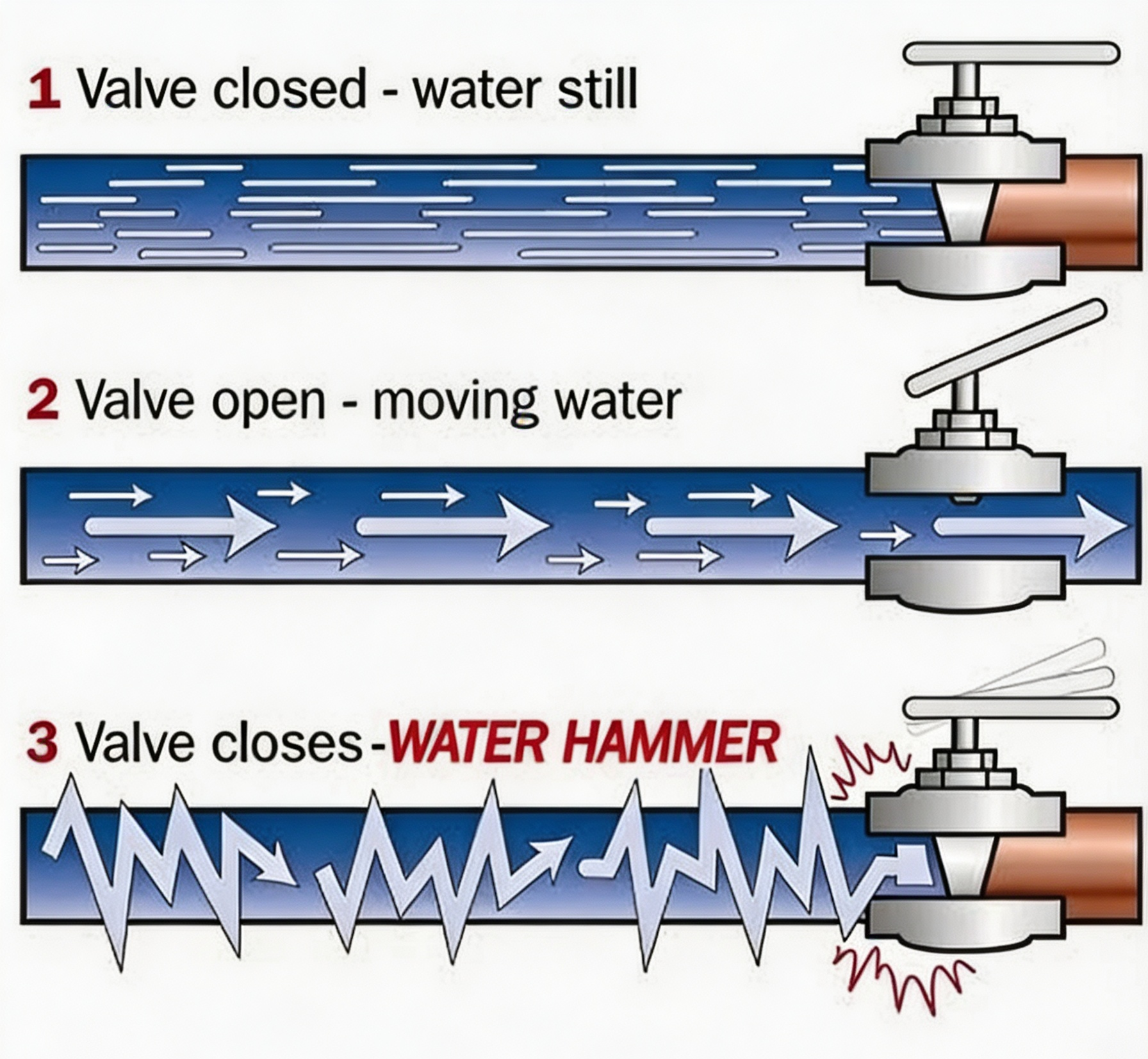
Water hammer, also known as hydraulic shock, is a pressure surge that occurs when the velocity of a fluid changes suddenly [1]. This can happen in two typical ways:
- Sudden flow stoppage: When a valve closes quickly, the moving liquid is forced to stop, and its kinetic energy is converted into a high-pressure wave that travels back through the pipe [2]. This is the classic form of water hammer.
- Sudden flow acceleration: When a valve opens quickly, a stationary or slow-moving liquid is suddenly accelerated. Because liquids have inertia and the upstream pressure is already high, this rapid acceleration can also generate a strong pressure spike, especially in discharge or drain lines [4].
In industrial solid-liquid filtration, water hammer is most likely to occur during the discharge or back-flushing stage. When a drain valve or back-flush valve opens suddenly, the pressurized liquid rushes into the drain line almost instantly. The faster the valve opens, the greater the initial flow surge and the resulting pressure shock. In multi-element filters, this effect is more serious because the flow may be concentrated into only one or a few branches.
Therefore, in automatic back-flushing filters, water hammer is often caused not by closing a valve, but by rapidly opening the drain valve to release a large volume of pressurized liquid. According to the Hydraulic Institute [1], Engineering ToolBox [2], and Crane Technical Paper No. 410 [4], both sudden flow stoppage and sudden flow acceleration can produce damaging pressure surges in industrial piping systems.
2. What Are the Hazards of Water Hammer? What Are the Risks in Industrial Filtration Processes?
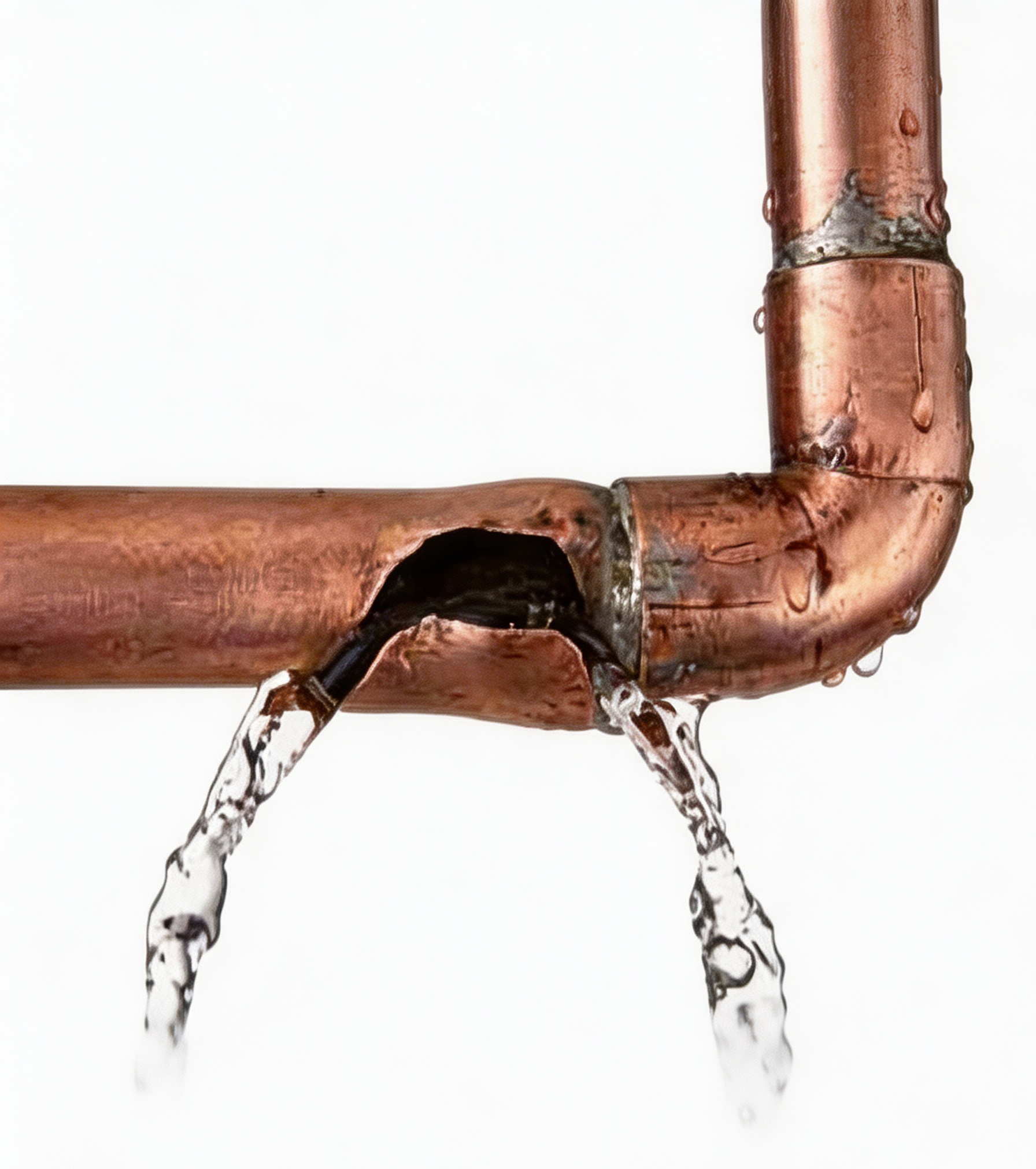
Water hammer is not just a noise problem. It can cause serious damage to industrial filtration systems and surrounding equipment [3].
Common hazards include:
- Pipe and fitting damage
The sudden pressure spike can burst pipes, crack flanges, or loosen joints. In filtration systems, the drain piping is especially vulnerable because it often handles high-velocity slurry or dirty liquid [4].
- Valve failure
Quick-opening or quick-closing valves, such as pneumatic ball valves or solenoid valves, can be damaged by repeated water hammer. Seats, seals, and actuators may wear out quickly [2].
- Vibration and mechanical stress
Strong vibration can loosen bolts, damage instrument connections, and even cause structural fatigue over time [4].
- Pump and filter element damage
Pressure surges can transmit backward and affect the filter housing, filter elements, and upstream pumps. This is especially risky in multi-cartridge or multi-tube filters where flow is concentrated [1].
In industrial solid-liquid filtration, the most common water hammer scenario occurs during automatic back-flushing. When only one or a few filter elements are back-flushed at a time, the discharge flow is concentrated. If the drain valve opens quickly, the sudden rush of liquid creates a strong pressure wave. Engineers at VITHY Filtration have observed this in some conventional back-flushing filters: the moment the drain valve opens, the flow is large, the pressure is high, and the vibration is strong enough to damage the drain pipe over time.
By contrast, a well-designed self-cleaning scraper filter is less likely to cause water hammer. In a scraper filter, the discharge path has low resistance, and the drain flow is relatively small. As a result, the pressure change is gradual, and the vibration level is much lower. This has been confirmed by field experience: customers using VITHY Filtration’s VAS Self-cleaning Scraper Filter have not reported water hammer issues.
3. How to Avoid Water Hammer in Daily Industrial Filtration Operations?
There are several practical ways to reduce or avoid water hammer in filtration systems. Many of these are low-cost and can be implemented in existing installations [4].
(1) Slow down valve operation
Use pneumatic or electric actuators with speed control. Adding an air source regulating valve to the solenoid valve can make the valve open and close more slowly, reducing the pressure surge. However, this method may increase water consumption during the back-flush cycle because the valve stays open longer [5].
(2) Secure the drain piping
Drain pipes should be firmly supported and anchored to absorb vibration. Unsecured pipes are more likely to shake violently during sudden pressure changes [4].
(3) Install a manual throttling valve
A simple manual valve installed on the drain line can be partially closed (e.g., 50% opening) to restrict the discharge flow and reduce the pressure spike. By limiting the maximum flow rate, the throttling valve prevents the liquid from accelerating too quickly, even if the drain valve opens fast. This is a practical solution for existing filters, but it should be checked regularly to ensure the valve position has not changed [5].
(4) Use proper valve selection
Select valves with appropriate closing times for the system. Avoid oversized valves that open or close faster than necessary. In automated systems, choose actuators with adjustable speed [1].
(5) Consider filter design
The best long-term solution is to choose a filter whose flow path and drain design inherently avoid water hammer. This is especially important for new projects or when replacing old equipment [3].
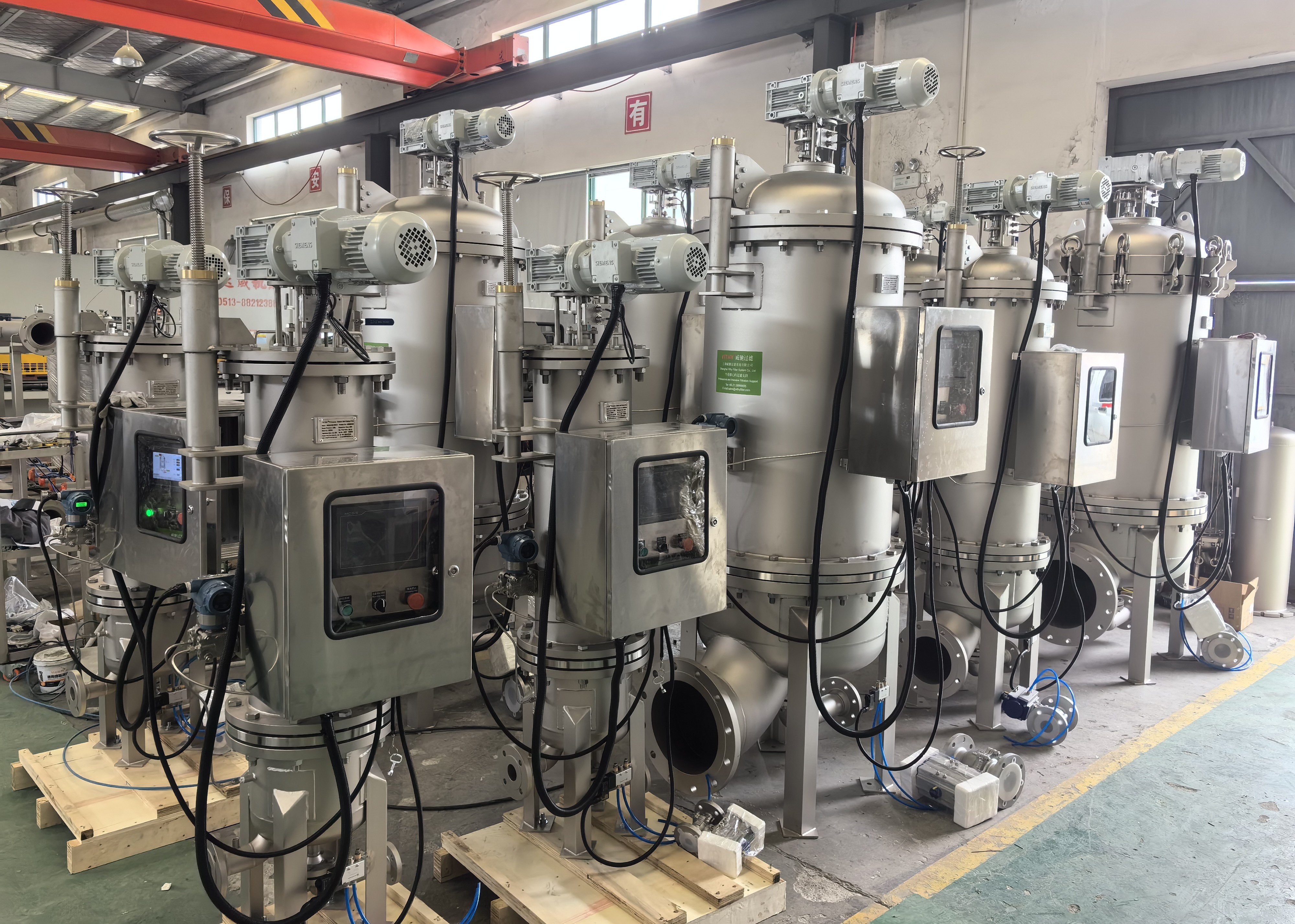
VITHY Filtration_VSRF Automatic Back-flushing Filter_1
4. How VITHY Filtration Prevents Water Hammer Through Optimized Design and Configuration
At VITHY Filtration, water hammer prevention is not an afterthought—it is built into the filter design and system configuration. We offer two main types of automatic self-cleaning filters, each with a different approach to avoiding hydraulic shock.
VAS Self-cleaning Scraper Filter
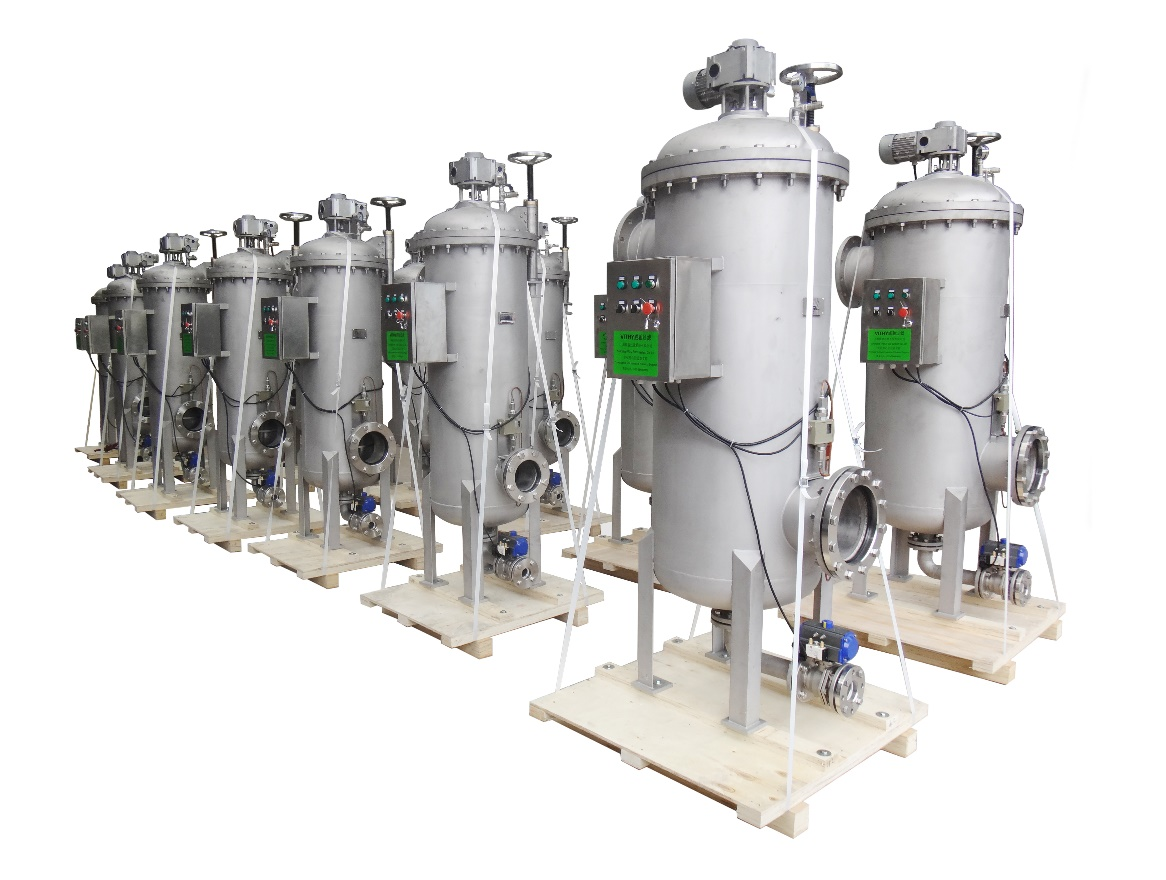
The VAS series uses a mechanical scraper to remove impurities from the filter mesh. The discharge flow is small, and the drain path has low resistance. Because the filter operates with a low-pressure differential during cleaning and the scraper mechanism does not rely on sudden reverse flow, water hammer is naturally avoided. In our field experience, customers using VAS filters have not reported water hammer problems, even after long-term operation.
VITHY Filtration_VAS Self Cleaning Scraper Filter
VSRF Automatic Back-flushing Filter
The VSRF series is designed for applications that require automatic back-flushing of individual filter elements. In a conventional back-flushing filter, when only one or a few elements are back-flushed at a time, the flow is concentrated and the drain valve opening can cause a strong pressure surge. VITHY Filtration has addressed this issue in two ways:
(1) Pneumatic speed control on the drain valves
An air source regulating valve is installed on the solenoid valve. The valve could slow down the valve opening and closing speed. This significantly reduces the pressure spike and vibration during back-flush. We recommend periodic inspection of the regulating valve nut to ensure it remains properly tightened. Over time, vibration can cause the nut to loosen, which may reduce the damping effect and allow water hammer to return.
(2) Drain line recommendations
If slowing the valve is not preferred because it increases back-flush water consumption, we recommend two additional measures:
- Firmly fix and support the drain piping to absorb vibration.
- Install a manual valve downstream and keep it only half open during back-flush. This limits the maximum discharge flow rate and prevents the liquid from accelerating too quickly, without increasing total water consumption.
By combining thoughtful flow path design, controlled valve actuation, and practical installation advice, VITHY Filtration helps customers avoid the costly consequences of water hammer while maintaining reliable solid-liquid separation.
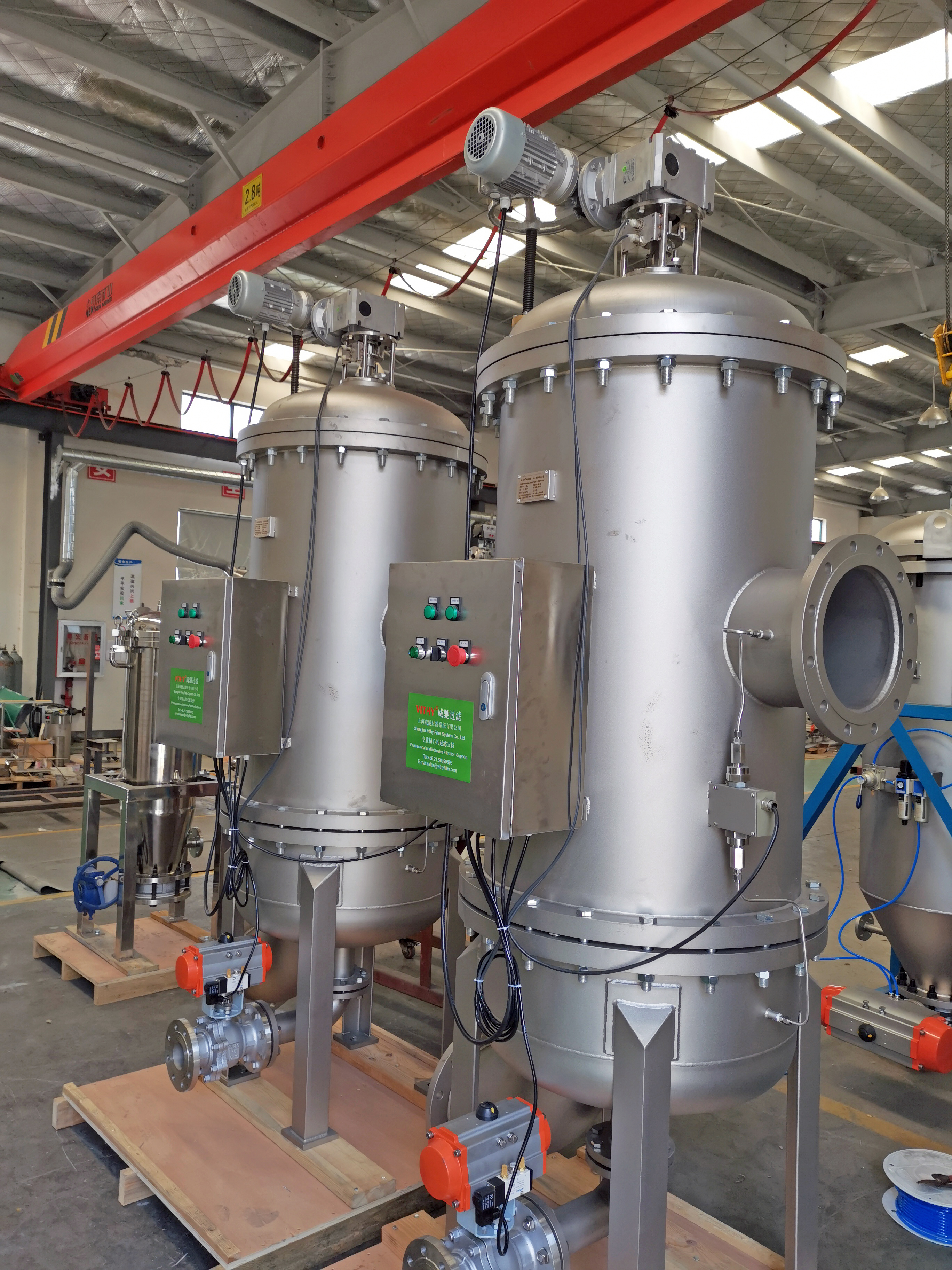
VITHY Filtration_VSRF Automatic Back-flushing Filter_2
References
[1] Hydraulic Institute. (n.d.). Water Hammer. Retrieved from https://www.pumps.org – Technical resources on pump and piping system pressure surges.
[2] Engineering ToolBox. (n.d.). Water Hammer. Retrieved from https://www.engineeringtoolbox.com – General engineering reference on hydraulic shock.
[3] American Water Works Association. (2017). Steel Pipe: A Guide for Design and Installation (Manual M11). AWWA.
[4] Crane Co. (2011). Flow of Fluids Through Valves, Fittings, and Pipe (Technical Paper No. 410). Crane Co.
[5] U.S. Environmental Protection Agency. (n.d.). Water Hammer. Technical guidance on drinking water distribution systems. Retrieved from https://www.epa.gov.
About VITHY Filtration
Founded in 2013, VITHY Filtration operates two manufacturing plants located in Shanghai and Jiangxi, China. We are proud to hold multiple national certifications, including Shanghai High-tech Enterprise, Specialized and Sophisticated SME, CE, and ISO, along with over 30 national patents. Our main products include Self-cleaning Filters, Back-flushing Filters, Candle Filters, Leaf Filters, Bag Filters, Basket Filters, Cartridge Filters, and Filter Elements. Our solutions are widely applied across various industries, including Petrochemical, Fine Chemicals, Food & Beverage, Pharmaceutical, Water Treatment, Pulp and Paper, Lithium Battery Manufacturing, Electronics, and more.
Contact: Melody, International Trade Manager
Mobile/WhatsApp/WeChat: +86 15821373166
Email: export02@vithyfilter.com
Website: www.vithyfiltration.com
YouTube: https://www.youtube.com/@ShanghaiVITHYFilterSystemCoLtd
TikTok: https://www.tiktok.com/@vithy_industrial_filter
Post time: Aug-27-2026


